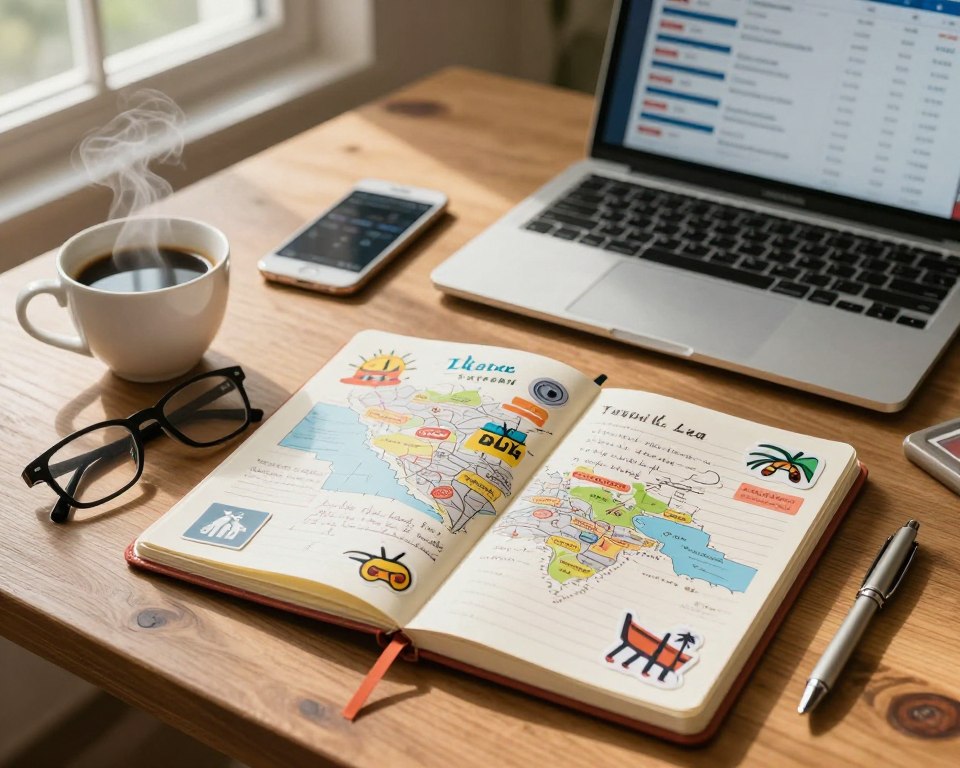
One study found that 72% of people said a change of place sparked their best ideas. That scale shows how a well-made system can turn any trip into fertile ground for work and wonder.
You’ll define a portable system you can repeat anywhere so your craft won’t vanish the moment you left home. This approach treated travel as both input and test: new scenes gave you fresh inspiration while delays and tight time forced inventive problem solving.
Who is this for? You, a creator who wanted to document an adventure without turning every moment into nonstop posting. The goal was sustainable output and deeper storytelling, not chasing every update.
In this guide, you would see the core building blocks: non-negotiables, simple planning, a daily rhythm, curiosity practices, clear capture-versus-post boundaries, and short reflection habits that protected your perspective.
Expect practical levers—novelty, awe, reflection, and recovery time—to help keep your creativity consistent across any trip.
Why Travel Fuels Creativity for Travel Creators
Stepping out of your usual schedule forces your brain to solve new problems, and that spark often becomes your best source of fresh work.
Breaking your routine to unlock new ideas
Leaving familiar patterns interrupts autopilot. Your mind must adapt to unfamiliar logistics and people. That pressure nudges you toward new ideas you rarely reach at home.
Sensory overload that sparks fresh perspectives
New sights, sounds, tastes, and textures make your brain link things in novel ways. Those sensory hits turn small moments into unexpected story hooks.
New cultures, new thoughts, and a bigger sense of the world
Watching daily rituals, public spaces, and design choices expands how you frame stories. Immersion in local cultures gives you more dimensional material than landmark-only coverage.
Solitude and reflection that turn experiences into creative direction
Quiet pockets—on a train, a hike, or a slow morning—let you sort impressions into usable ideas. Reflection converts raw experiences into intentional work, not just collected clips.
Takeaway: You get the best results when you balance deep immersion with deliberate reflection. Input without meaning-making stays shallow; reflection without fresh input runs dry.
| Input | Immediate Effect | Creator Outcome |
|---|---|---|
| New sights & sounds | Heightened attention | Original angles and hooks |
| Local cultures | Broadened perspective | Richer, layered stories |
| Solitude & reflection | Clarified meaning | Focused direction for projects |
Define Your “Creative Routine Travel” Non-Negotiables
Pick a few tiny habits that travel-proof your creative work no matter where you are. These non-negotiables are the smallest actions you commit to each day so your process stays steady even when plans shift.
Choose a repeatable daily process you can do anywhere
Quick capture, quick notes, quick labeling, quick reflect. Do these four steps in under 10 minutes. This low-cost process keeps files organized and ideas fresh without eating your time.
Set a creative intention for each day of your trip
Before you go out, name one thing you want to notice. Pick a hero focus—light, food, people, architecture, or mood. That single focus prevents scattered shoots and makes the day feel purposeful.
Build in recovery time to protect your creativity
Remember that stepping outside your comfort zone drains energy and grows ideas. Protect sleep, quiet walks, and short breaks as part of your plan. Energy matters more than effort; rest keeps your work sharp.
- Non-negotiable actions: capture, label, reflect.
- Daily intention: one hero focus per day.
- Recovery: night rest, unplugged hour, or a calm walk.
Tip: If you want more low-effort ways to experiment on short trips, check microadventure ideas at microadventure ideas.
Plan Before You Go to Protect Time, Energy, and Inspiration
Plan intentionally so your days free up the time and energy needed to notice what matters. Good planning is not control; it is a way to protect presence and make room for awe.
Pick a flexible itinerary that leaves room for discovery
Set just two or three anchors per day. That gives you space to wander and increases the chance of unexpected creative wins. Add buffer blocks to your calendar so you can stay and watch a scene unfold.
Pack a lightweight creator kit that matches your art
Choose one kit that supports your main medium. For film, a phone, small mic, and extra battery. For drawing, a compact sketch kit. For painting, a grab & go painting kit.
Create a simple shot list built around moments—not places
Focus on gestures, light changes, transitions, and textures. These details make content feel alive and true to the place.
| Plan Element | Why It Matters | Practical Example |
|---|---|---|
| Flexible anchors | Protects energy and curiosity | Two key visits + open afternoon |
| Lightweight kit | Prevents overload | Phone, mic, journal or sketch set |
| Moments shot list | Captures subtle, repeatable beats | Gestures, textures, golden hour shifts |
| Bounded inspiration | Guides without dictating | Save a few images or books to consult |
Design a Daily Rhythm That Balances Work and Adventure
Structure your day so you capture great work without letting documenting take over your experience. Small, repeatable beats help you move through the day with purpose while leaving room for surprise and real connection.
Morning capture: notice first, then record
Start the morning by looking and listening for a few minutes. Let your attention find the best moments before you record them.
When you film or photograph, aim for a short, focused set of shots that match that morning’s intention. This saves you time later and keeps your footage grounded.
Midday exploration: go off the beaten path
Use the middle of the day to wander intentionally. Seek quieter streets, local food stalls, or small markets to meet people and find fresher angles.
Going off the main route increases novelty and gives you original material for future posts and projects.
Evening wrap: select, label, and back up
Spend 10–15 minutes at night to pick the best clips, add short labels, and back up files. This tiny process prevents post-trip overwhelm and reduces loss.
Use a simple naming way: date + location + short note. For a proven nightly backup workflow, see the nightly backup workflow.
Micro-breaks to stay present and avoid burnout
Insert short breaks across the day: a five-minute walk, a coffee stop without screens, or quiet breathing between shoots.
These pauses protect energy and sharpen your ability to notice meaningful experiences. For common situations—late check-ins, delays, or fatigue—stick to the core process: notice, capture sparingly, and save organizing for a calm block of time.
| Part of Day | Main Goal | Simple Action |
|---|---|---|
| Morning | Notice & record | Look 2–3 minutes, then shoot 3 focused clips |
| Midday | Explore & meet people | Choose one off-route street or market |
| Evening | Organize & back up | Select best items, label, backup |
| Throughout | Protect energy | 5–10 minute micro-breaks every few hours |
Use Curiosity and Serendipity to Find Better Stories
Start each morning with a single starting point, then let curiosity steer the rest of your day. This creates structured freedom: enough frame to reduce decision fatigue and enough openness to catch real moments.
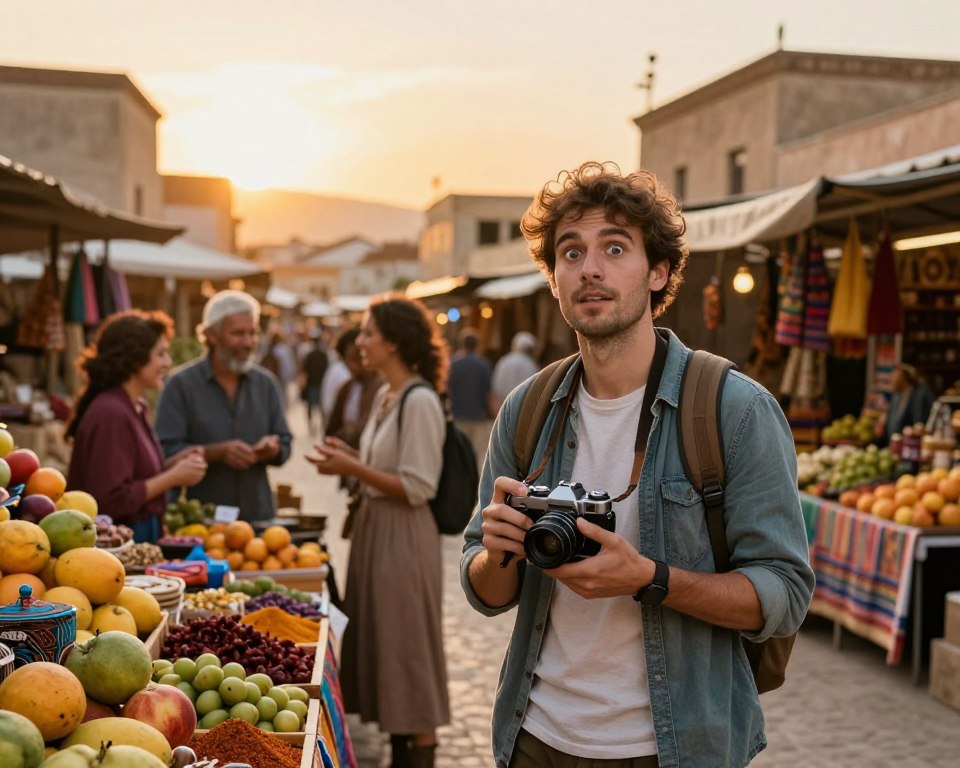
Wander from a starting point
Choose a neighborhood, a plaza, or a coffee shop as your anchor. Walk without a strict plan and notice what repeats or surprises you. That small rule lets chance supply fresh material while you keep a loose aim.
Try new things and limit repeats
Make a rule: avoid returning to the same spot twice unless it truly stands out. Trying new things raises the number of distinct inputs you collect on trips. More inputs mean more ways to craft a unique story.
Ask thoughtful questions that open doors
When you meet locals, ask simple, specific questions: “Where do people go on slow afternoons?” or “What dish is only made in this neighborhood?” These questions reveal seasonal traditions, hidden viewpoints, and experiences search engines miss.
People are the fastest route to originality. A single recommendation can flip your day and give you a scene no one else captured. Unexpected situations create tension, humor, and learning—exactly the hooks that strengthen storytelling.
Action step: Schedule one daily “serendipity block” of 60–90 minutes. Stop optimizing, wander, and pick one small surprise to capture and label for later use.
| Approach | Why it works | Quick example |
|---|---|---|
| Structured freedom | Reduces decision fatigue, improves focus | Start at a market, wander 60 minutes |
| Novelty practice | Increases variety of story inputs | Never the same café twice |
| Thoughtful questions | Unlocks non-searchable experiences | Ask: “What’s only here in spring?” |
| People-first sourcing | Leads to unique, shareable scenes | Local tip → hidden viewpoint at sunset |
Turn New Experiences Into Content Without Killing the Moment
Capture what your body remembers so your audience can feel the place, not just see it. Focus on quick, sensory captures that preserve the mood without demanding constant posting.
Capture the five senses to make your audience feel the place
Record 10 seconds of ambient audio. Jot three fast sensory notes: smell, texture, temperature. Take two close detail shots that show touch or motion.
Separate “living” time from “posting” time
Protect presence by limiting posting windows. Try one short posting block per day, batch edits every few days, or save most sharing until after the trip.
Collect small details that become big storytelling hooks
Save ticket stubs, overheard lines, signage typography, and a photo of a dish. These tiny artifacts carry emotional specificity and spark better ideas later.
When you protect your life in the moment, you produce truer work and avoid burnout. That way your creativity stays honest and your content gains depth.
| Quick Action | What to Capture | Why It Matters |
|---|---|---|
| 10s ambient audio | Street sound, market noise | Recreates atmosphere for viewers |
| 3 sensory notes | Smell, temperature, texture | Anchors memory for storytelling |
| 2 detail shots | Close-up of hands, food, sign | Provides vivid hooks for posts |
Build Reflection Into Your Routine With a Travel Journal
Ten minutes with a pen or a notes app can turn scattered days into clear next steps. Frame your journal as the trip’s meaning engine: it converts what happened into what matters for your work and life.
Daily prompts to process what you saw, felt, and learned
Each night answer four quick prompts: what surprised you, what you felt, what you noticed about people, and what you’d do differently next time. These prompts make reflection fast and focused.
Save tickets, sketches, and notes to preserve creative memories
Keep small artifacts—tickets, receipts, brochures—and add a 30‑second sketch or two lines of notes. Physical mementos plus short entries preserve detail that photos miss.
Use reflection to uncover new perspectives on your life and work
Journaling helps your brain consolidate details, strengthen recall, and speed post‑trip edits. Over days, patterns appear: themes you return to, ideas you want to explore, and shifts in how you see your life.
- Practical habit: 10 minutes a day.
- Outcome: usable captions, clearer projects, and new perspectives to guide future trips.
Get Comfortable Being a Beginner Again
Treat the first attempts as experiments: they teach you more than flawless repeats ever will. When you start something new, the discomfort is normal and useful.
Why it feels personal: In art you attach identity to output. That makes stepping out of your comfort zone feel riskier than ordinary challenges. Still, the same impulse that pushes you to explore also widens your vision, as Dr. Shelley H. Carson has noted.
Reframe fear of failure as an adventure
Curiosity equals success here, not perfection. Treat awkward moments like fieldwork: you gather data—snapshots, notes, sketches—and learn what matters next.
Use “If I didn’t have to do it perfectly…” prompts
Try this prompt to unlock ideas: “If I didn’t have to do it perfectly, I would…” Fill in answers for shots, captions, sketches, or mini-stories you’ve avoided. Use the list to pick one item to try that day.
- Normalize beginner fear. It happens in art and in life when you leave your comfort zone.
- Experiment with new ways: pair photos with a quick journal line or add a 30‑second sketch.
- Let public learning build confidence; your work will become more distinct over time.
Remember: Your creative life is something you live, not a constant audition. Comfort with imperfection becomes a strategic advantage for steady growth.
Lean Into Challenge as a Creativity Practice
Unexpected problems on the road are actually low-risk labs for testing new ways of working. When something goes wrong, your brain gets practice shifting from plan to play. That mental flex builds resilience and new skills you can use everywhere.
Travel problems as real-time problem-solving
Missed flights, sudden closures, and weather flips force quick decisions. You learn to improvise shots, reschedule visits, or find a nearby scene that still tells the story.
This process trains you to find a new way to reach goals under constraint. Constraints make ideas sharper and more memorable.
Language barriers and detours that expand your confidence
When you cannot rely on words, you notice body language, context, and small details. That attention helps you communicate intent with people and scenes in clearer, more visual ways.
Detours push you into zones you did not plan for. Those unexpected zones often yield richer visuals and more original storytelling than the tourist path.
Practical takeaway: build time buffers, keep multiple backups, and simplify your workflow so a problem does not derail a whole day. These habits let you treat setbacks as useful practice instead of crises.
| Common Situation | Immediate Adaptation | Creative Benefit |
|---|---|---|
| Missed flight or long delay | Shift plan, scout airport or nearby area | Find quiet human moments and unique angles |
| Weather change | Switch to indoor details or abstract shots | New textures and mood-driven material |
| Transit disruption | Take a detour, walk a neighborhood | Discover unrehearsed scenes and local people |
| Language barrier | Use gestures, photos, and patience | Sharper observation, stronger nonverbal storytelling |
Tap the Science: Novelty, New Neural Pathways, and the Power of Awe
When you meet something new, your brain makes fresh connections that help you see options you missed before. Novel experiences and short bursts of learning support formation of new neural links. This process helps the brain become more flexible and better at problem solving.
Why learning on the road strengthens thinking
Learning history, a bit of language, or a new skill disrupts default patterns. That disruption encourages your mind to form new neural pathways and to recombine ideas in useful ways.
Awe moments that expand time and possibility
Awe acts like an amplifier. It widens your sense of time and increases openness to novel ideas. Researchers have linked awe—standing before a vast canyon or the night sky—to improved mood and more flexible thinking.
“The experience of awe can increase tolerance for uncertainty and openness to unusual ideas.” — Helen de Cruz
How new perspectives reshape your identity over years
Small shifts add up. Over years of visits, your taste, topics, and the way you tell stories will change. These layered perspectives make your work more varied and richer.
- Seek novelty: aim for one new scene or habit each day.
- Practice learning: spend five minutes on a local fact or phrase.
- Make room for awe: schedule quiet time to notice big or small scenes.
| Mechanism | What Happens | Creative Benefit |
|---|---|---|
| Novel experience | Forms new neural pathways | Flexible thinking, more associations |
| Short learning bursts | Reinforces new links in the brain | Faster problem solving |
| Awe moments | Expands sense of time and possibility | Higher openness and risk tolerance |
Action step: pick one small learning goal each day, and leave 15 minutes unplanned to let awe land. Over years, these habits will compound into broader perspectives and stronger creativity.
Conclusion
Even a day away can reframe how you see the world and spark new ideas.
Use the simple framework: plan lightly, pick non-negotiables, set a daily intention, follow curiosity, capture with your senses, and reflect each night. These steps help turn short trips into lasting output.
Protect your time and your life on the road. Presence produces the most meaningful work. Keep comfort and recovery as part of the plan so your brain stays fresh.
Start now: choose one intention each morning and a 10‑minute evening wrap. Over time, novelty plus consistency will reshape how you see world and what you make.
Your creative identity evolves with each trip; let people, place, and questions guide the long arc of your work.